Colorlab Research Samples
Laboratorium / Colorlab
Laboratorium is the experimental lab for art/design and biotechnology at KASK / School of Arts Ghent‘. As a biolab in art and design, it focuses on exploring different interactions between art, science and technology.
3 phases are crucial for the lab to operate.
ACTIVATION: We are intrinsically curious about color coming from nature and investigate how the lab can explore and link between nature and color reducing environmental impact in the context of art and design. Hands-on research through making goes hand in hand with constructing a theoretical framework around color.
IMPLEMENTATION: biolab accommodates and facilitates hands-on research to help finding practical applications (design) and materialising artistic concepts (arts). In this iteration process of application and making the theoretical and practical research are questioned and refined.
INNOVATION: Biolab has established itself as an expertise center in color in which innovation is key. The innovative research naturally finds its way back into the activation and implementation phase.
Maria Boto is the lead researcher for Biolab.

Type: lichen Color: yellow, pink, blue


Type: Fungi Color: yellow, grey, pink Pigment production: Growing conditions: mushroom substrate Applications tested: spores on paper
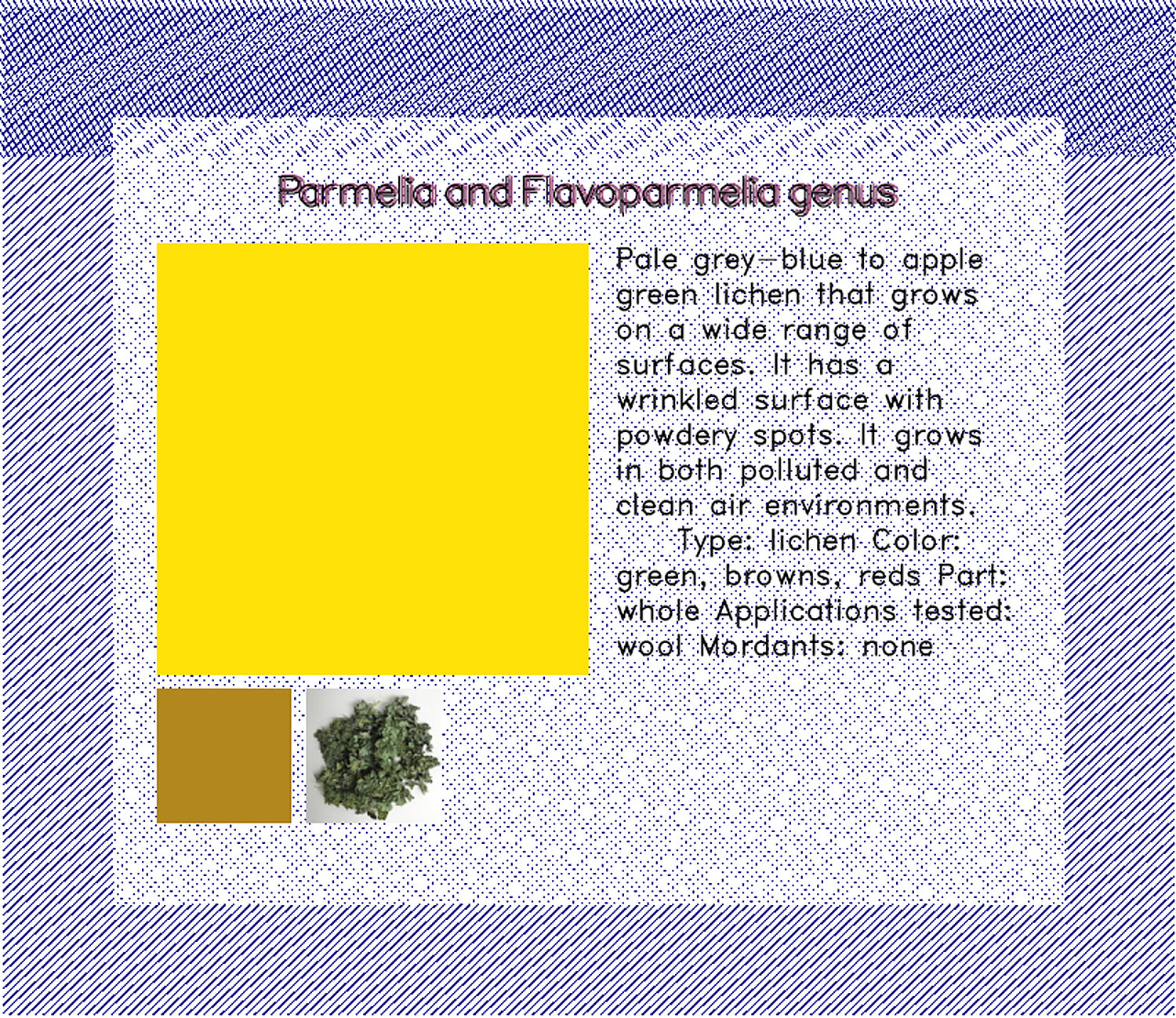
Pale grey-blue to apple green lichen that grows on a wide range of surfaces. It has a wrinkled surface with powdery spots. It grows in both polluted and clean air environments.
Type: lichen Color: green, browns, reds Part: whole Applications tested: wool Mordants: none

Logwood is a small spiny tree, height: 9-15 m, short trunk irregularly fluted and contorted. Discovered by the Spanish and was exported to Europe as an important source for dye: black and purple textile dye from the 16th cent. The generic name of logwood Haematoxylum (often spelled Haematoxylon) means bloodwood, referring to the dark red heartwood.
Type: tree Color: purple, red and black Part: wood Applications tested: dyed cotton Mordants: alum, iron, titane
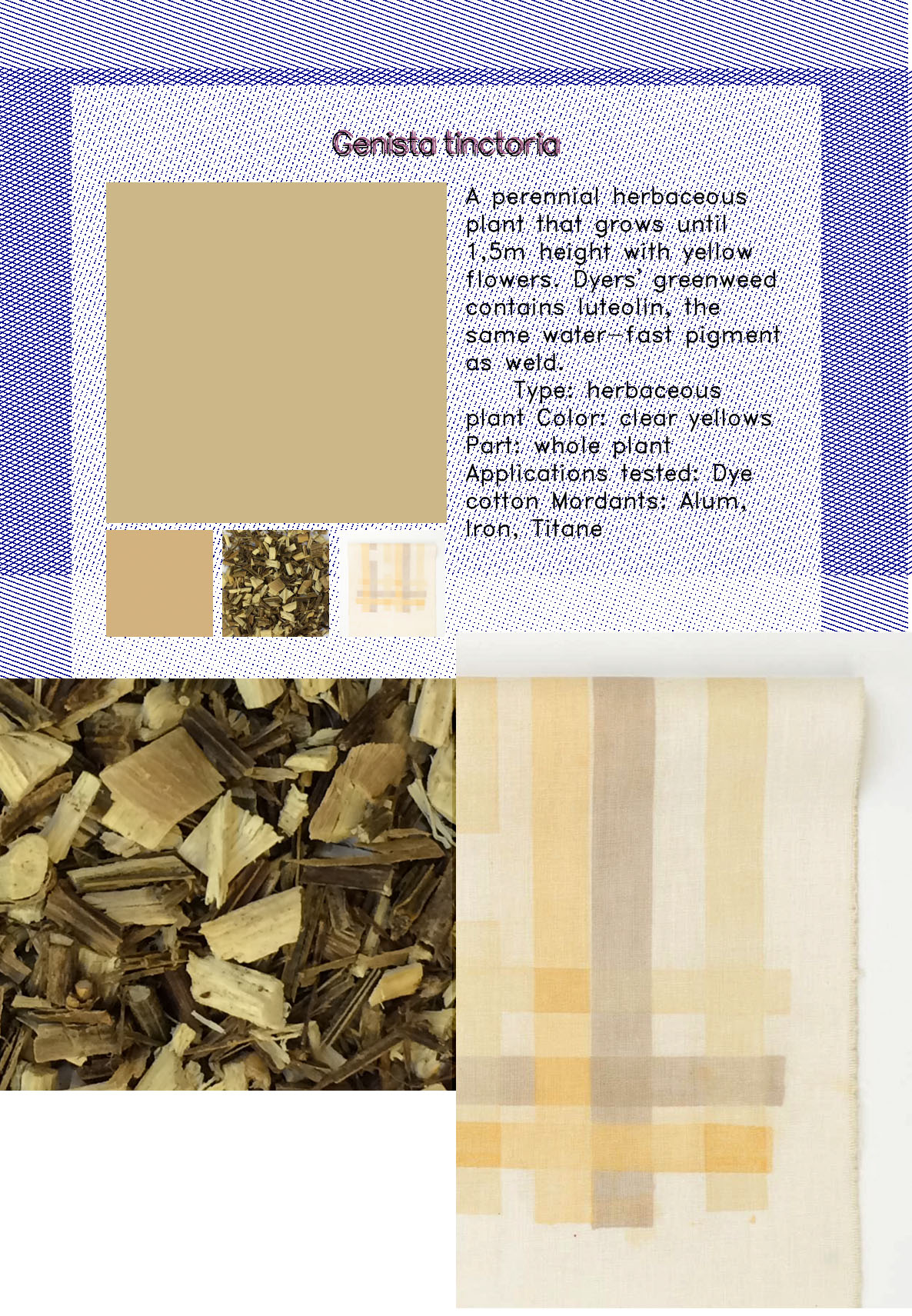
A perennial herbaceous plant that grows until 1,5m height with yellow flowers. Dyers’ greenweed contains luteolin, the same water-fast pigment as weld.
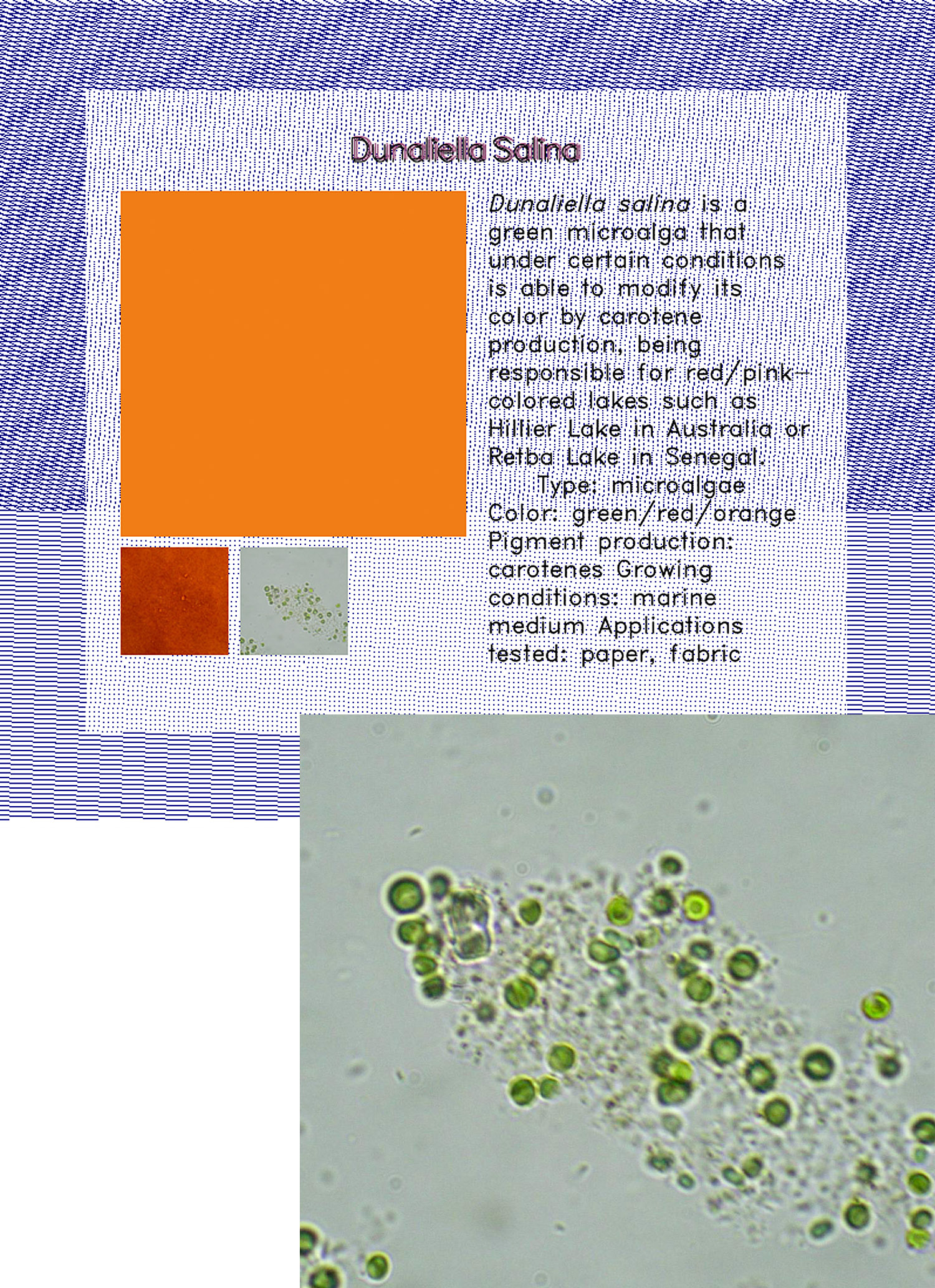
Type: microalgae Color: green/red/orange Pigment production: carotenes Growing conditions: marine medium Applications tested: paper, fabric

Type: flower Color: yellow, orange Part: flowers Applications tested: dyed cotton Mordants: alum, iron, titane

Small green-blue mushroom with a turquoise mycelium. It is able to change the color of the wood that infects, making it a valuable material for decorative woodworking (green oak).
Type: Fungi Color: blue-green Pigment production: xylindein Growing conditions: forest on decaying wood Applications tested: wood
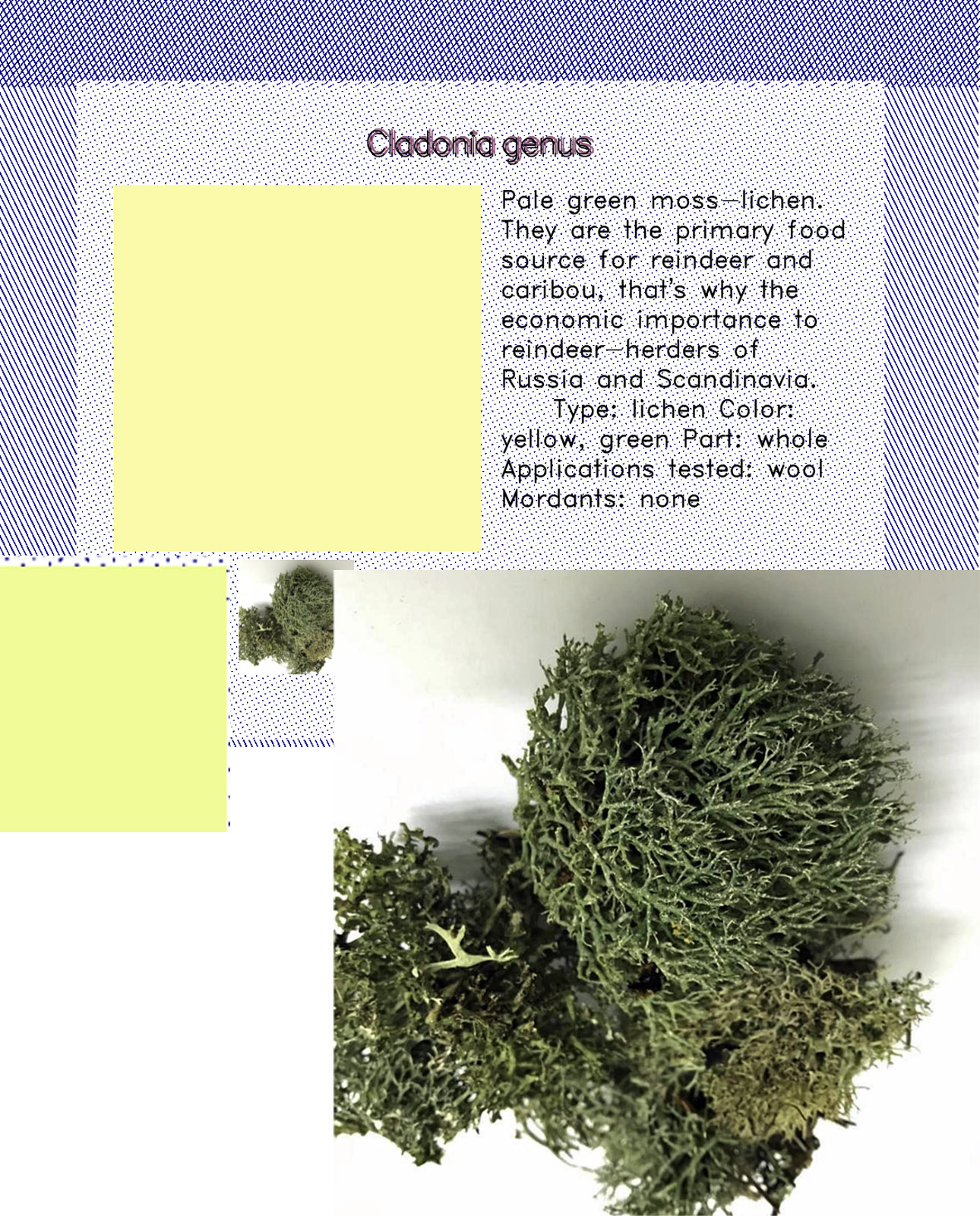
Pale green moss-lichen. They are the primary food source for reindeer and caribou, that’s why the economic importance to reindeer-herders of Russia and Scandinavia.
Type: lichen Color: yellow, green

Freshwater unicellular green microalgae. It is used as a food supplement because it is high in proteins, lipids and other essential nutrients. These round-shaped microalgae multiply rapidly through photosynthesis. High chlorophyll content.
Type: microalgae Color: blue/green Pigment production: chlorophyll, phycocyanin Growing conditions: fresh water medium Applications tested: paper, fabric
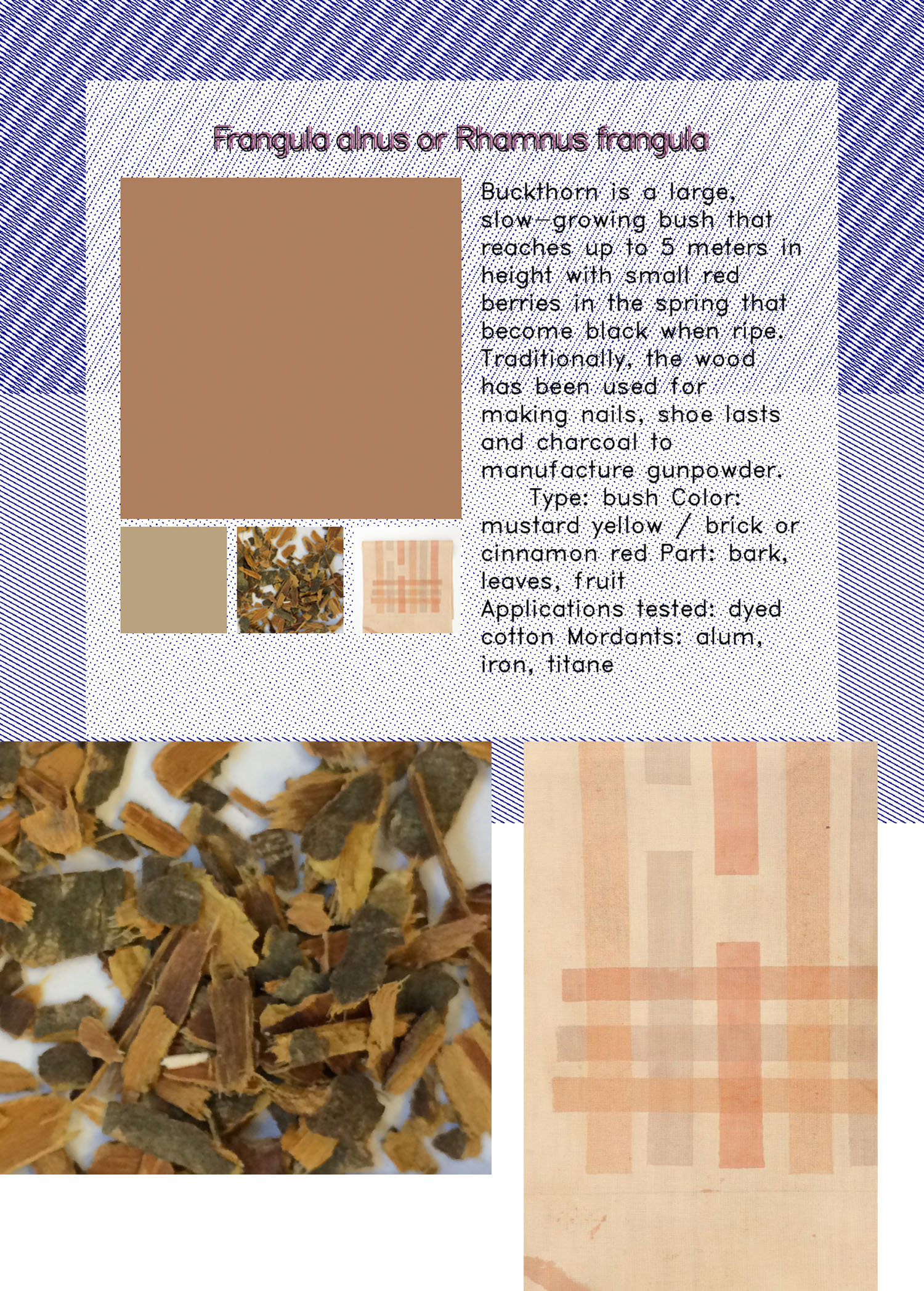
Buckthorn is a large, slow-growing bush that reaches up to 5 meters in height with small red berries in the spring that become black when ripe. Traditionally, the wood has been used for making nails, shoe lasts and charcoal to manufacture gunpowder.
Type: bush Color: mustard yellow / brick or cinnamon red Part: bark, leaves, fruit
Applications tested: dyed cotton Mordants: alum, iron, titane
Gram(-) soil bacteria which may live in symbiosis in the roots of leguminous plants. It takes atmospheric nitrogen and fixes it into ammonia. The nitrogen not used for the plant enriches the soil.
Type: bacteria / Color: yellow
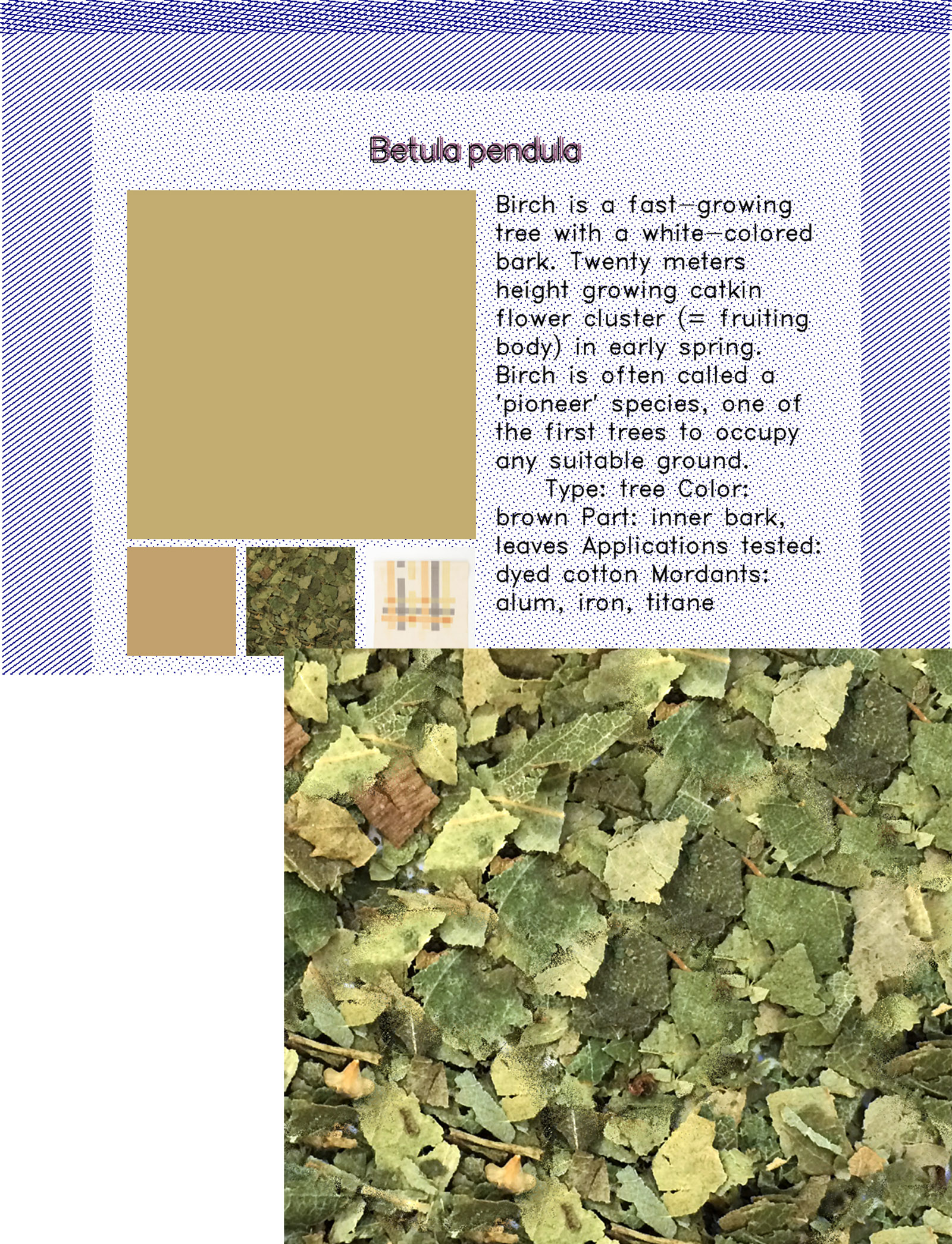
Birch is a fast-growing tree with a white-colored bark. Twenty meters height growing catkin flower cluster (= fruiting body) in early spring. Birch is often called a ‘pioneer’ species, one of the first trees to occupy any suitable ground.
Type: tree Color: brown Part: inner bark, leaves Applications tested: dyed cotton Mordants: alum, iron, titane


Parmelia and Flavoparmelia genus
Pale grey-blue to apple green lichen that grows on a wide range of surfaces. It has a wrinkled surface with powdery spots. It grows in both polluted and clean air environments.
Type: lichen Color: green, browns, reds Part: whole
Soil bacteria responsible for organic material degradation. It has a similar structure and life cycle than fungi, including spores formation. Actinorhodin production is pH-dependent, blue/green in an alkali environment and red in acidic mediums.
Type: bacteria Color: red, blue Pigemt: actinorhodin Applications tested: silk
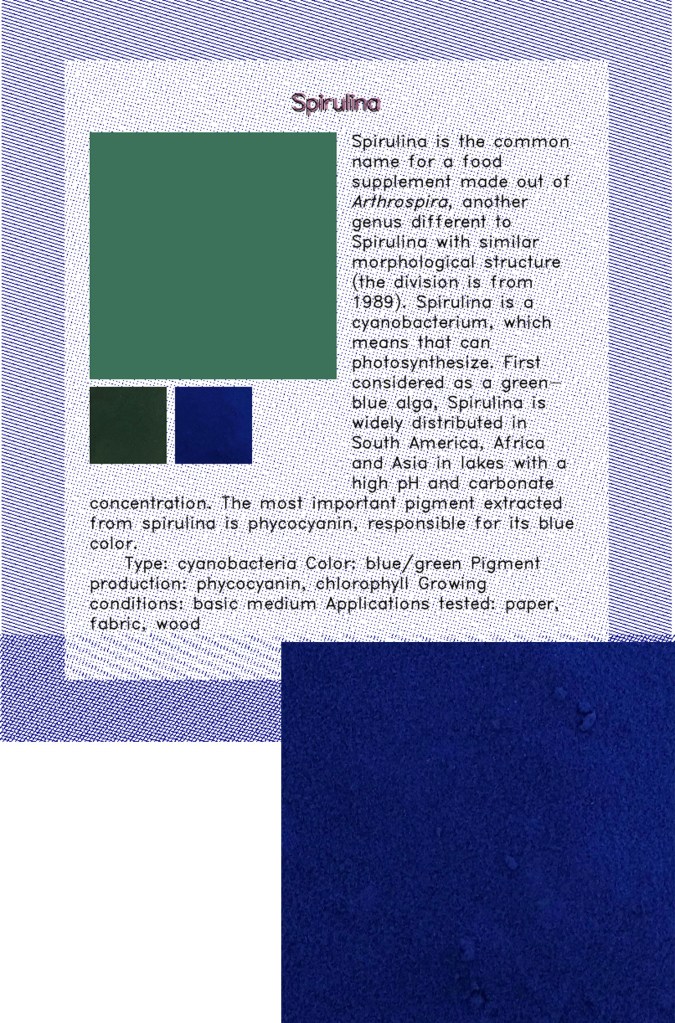
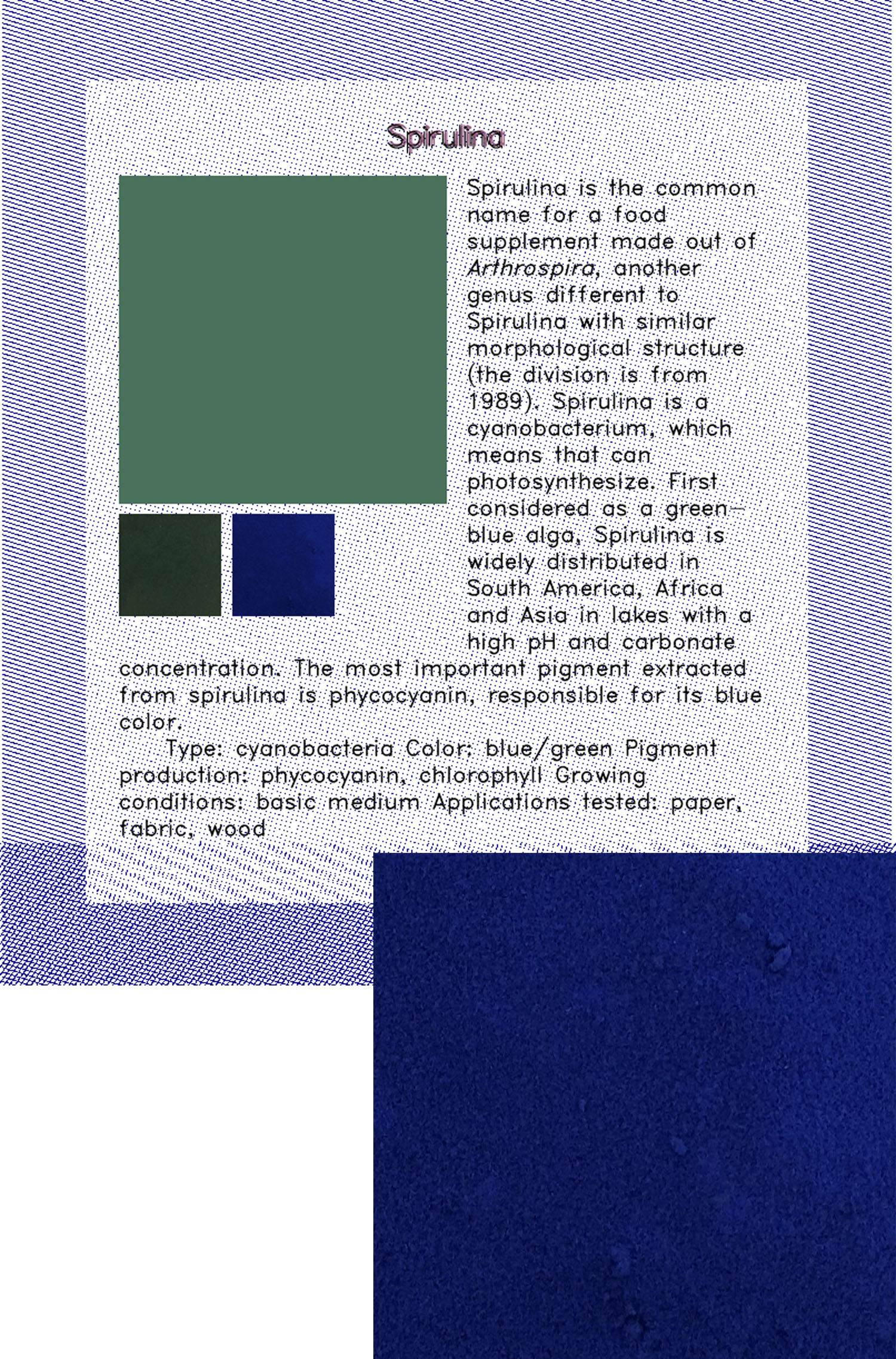
Spirulina is the common name for a food supplement made out of Arthrospira, another genus different to Spirulina with similar morphological structure (the division is from 1989). Spirulina is a cyanobacterium, which means that can photosynthesize. First considered as a green-blue alga, Spirulina is widely distributed in South America, Africa and Asia in lakes with a high pH and carbonate concentration. The most important pigment extracted from spirulina is phycocyanin, responsible for its blue color.
Type: cyanobacteria Color: blue/green Pigment production: phycocyanin, chlorophyll Growing conditions: basic medium Applications tested: paper, fabric, wood