Hazardous Reactions in Art
By Michael McCann, PhD, CIH
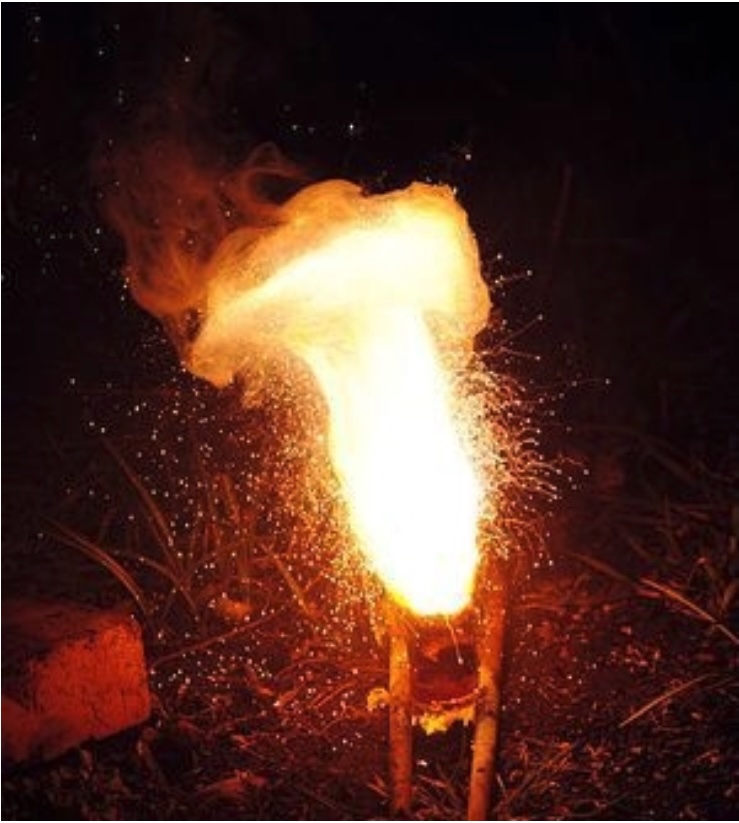
a thermite reaction (Wikipedia)
Many art materials are inherently hazardous, including toxic solvents and many metals, corrosive acids and alkalis, flammable solvents and combustible materials such as wood dust, and so forth.
However, artists not only have to be concerned about the hazardous properties of their art materials, but also have to be concerned about hazardous chemical reactions that can occur.
These hazardous reactions can occur in two basic ways: first, many art processes result in the production of toxic chemicals or other hazards as by-products of the process; and, second, many art materials are incompatible with other chemicals and can create toxic chemicals if they are accidentally mixed. In addition, some art materials are incompatible with heat, ultraviolet radiation, and other physical processes. These decomposition products and incompatibilities should be listed in the Reactivity section of Material Safety Data Sheets (SDS).
Hazardous Art Processes
Many art processes such as acid etching, acid pickling, kiln firing, photographic developing, patina application, etc. involve chemical reactions to produce the desired effect. However, these chemical reactions often produce other chemicals which are hazardous. For example, nitric acid etching on zinc plates involves a chemical reaction in which the zinc metal is converted into soluble zinc ions, thus creating etched lines or areas in the parts of the plate that are not covered with acid-resistant grounds or resists.
This same chemical reaction, however, also converts the nitric acid into nitrogen oxide gases, including nitrogen dioxide which can cause chemical pneumonia and emphysema. Flammable hydrogen gas is also produced. Thus there is the need for local exhaust ventilation to remove these unwanted gases.
Many art processes also create physical hazards such as noise, vibration, ultraviolet and infrared radiation. In particular, glassblowing, metal melting, pottery and enameling kiln firing all produce infrared radiation and heat. Arc welding, carbon arcs and neon sculptures produce ultraviolet radiation.
See Table 1 for a list of art processes and their hazardous chemical by-products.
Incompatible Art Materials
Acids, oxidizers, oxygen, heat and ultraviolet radiation are common examples of chemicals and physical agents that are often incompatible with art materials. Acids can react with many chemicals. Often artists take advantage of this to create a desired effect, for example, acid etching as described above. Often however, these reactions are not intended or desired and can create hazards.
Acids, for example, can react with ammonia and other alkalis to neutralize them. This neutralization reaction produces large amounts of heat which can result in spattering of boiling acid and alkali. Acids can also react with cyanides and other chemicals to produce poison gases (e.g., hydrogen cyanide).
Oxidizers are chemicals that can react with solvents, charcoal, wood dust, and other finely divided organic materials to cause a fire or explosion. Examples of strong oxidizers are concentrated nitric acid, dichromates and chromates, nitrates, and potassium chlorate.
Oxygen in the air can oxidize linseed oil (e.g. oil paints, intaglio and lithographic inks) and other organic oils and
turpentine, releasing heat in the process. If this heat can build up, for example a pile of oil-soaked rags in a corner, spontaneous combustion occurs resulting in a fire. Heat and ultraviolet (UV) radiation are sources of energy that can react with many chemicals to decompose them. Examples include the production of hydrogen cyanide gas from heating or exposing potassium ferricyanide (Farmer’s Reducer) to ultraviolet radiation, and the production of acrolein, a strong respiratory irritant and allergic sensitizer, and other decomposition products from the overheating of wax.
Table 2 lists the incompatibilities of many common art materials.
Storage
It is important to store art materials safely so that they will not react with each other if there is an accident and they mix. Incompatible chemicals should be stored separately to avoid this problem. For example, oxidizers should be stored separately from other chemicals, particularly combustible ones. Acids should be stored in a separate acid cabinet, with concentrated nitric acid stored separately from other acids. In addition, materials such as zinc plates should be stored away from even dilute nitric acid solutions because of the risk of an unwanted chemical reaction occurring in case of spills.
Chemical Reaction Hazards of Art Processes
Acid Etching
zinc, nitric acid Produces nitrogen dioxide and hydrogen gas.
Dutch Mordant
Mixing hydrochloric acid and potassium chlorate produces chlorine gas.
Acid Pickling sulfuric acid, sodium bisulfate
Heating produces sulfur dioxide gas.
Batik wax
Overheating and ironing out wax creates acrolein and other decomposition products.
Cleanup rags, paper towels Oil, turpenting, lithotine or d-limonene soaked rags or paper towels can cause spontaneous
combustion.
Fuel-fired furnaces and kilns, gas, wood, etc.
Produces carbon monoxide from incomplete combustion.
Jewelry
silver soldering : Fluorine-containing fluxes decompose to fluoride and hydrofluoric acid fumes.
Lost wax
castingwax burnout Produces acrolein and other decompostition products.
Photography fixing bath
Decomposition of fixer
hypo and sodium bisulfate produces sulfur dioxide gas.
sulfide and sepia toning Produces hydrogen sulfide gas.
selenium toning Produces sulfur dioxide gas.
Plastics – sculpture
heating,machining plastics Produces decomposition including hydrogen cyanide from polyeurethanes, hydrogen chloride
from polyvinyl chloride and methyl methacrylate from Plexiglas.
Pottery
bisque firing Decomposition of impurities in clay produces carbon monoxide, sulfur dioxide, etc. salt firing
Decomposition of salt to hydrogen chloride resulting in hydrochloric acid.
Raku firing Smoke and carbon monoxide from reduction firing in sawdust, leaves, etc.
Stained glass soldering
Zinc chloride fluxes decompose to hydrochloric acid. Other fluxes also have hazardous decomposition products.
Welding arc welding Produces ozone and nitrogen dioxide.
Wood working
particle board, plywood Machining decomposes formaldehyde-based glues to formaldehyde.
Table 2. Incompatible Art Materials
Art Materials – Uses – Incompatabilities – Hazard
Acetic Acid photography dyeing see Acids -Acids etching pickling cleaning dyeing
alkalais Neutralization of acid with alkali releases heat which can cause boiling.
Alkalais cleaning dyeing photography acids see above
Ammonium bichromate dye mordant photoprintmaking lithography see Oxidizers –
Ammonium hydroxide patina photography see Alkalis and Bleach,
household -Ammonium nitrate patina heat; see also Oxidizers Flammable Ammonium persulfate photography see Oxidizers
Explosive Ammonium sulfide patina see Sulfides –
Ammonium thiocyanate photography acids Forms hydrogen cyanide
Arsenic compounds glassblowing old pigments acids, alkalis Forms arsine gas
Benzoyl peroxide plastics see Peroxides –
Bichromates – see Dichromates and Oxidizers –
Bisulfites photography acids Forms sulfur dioxide Bleach,
household photography preservative dyeing acids Forms chlorinegas preservative photosilkscreen ammonia forms poison gas
Chlorinated hydrocarbons degreasers fabric cleaner heat, acids, UV Forms phosgene gas
Chromates ceramics pigments see Oxidizers –
Chromic acid cleaner see Oxidizers –
Copper Nitrate patina see Oxidizers –
Cyanides photography electroplating cleaning gold acids Forms hydrogen cyanide
Dichromates lithography photoprintmaking dye mordant see Oxidizers –
Dioxane film splicing oxygen in air Forms explosive Ethers solvent oxygen in air Forms explosive peroxides
Ethylene dichloride solvent see Chorinated hydrocarbons –
Ferric ferrocyanide blueprinting acid, heat, UV Forms hydrogen cyanide
Ferric nitrate patina see Oxidizers –
Hydrofluoric acid glass etching lithography see Acids –
Hydrogen peroxide, concentrated photography patina see Oxidizers –
Lead chromate pigment see Oxidizers –
Lye papermaking see Alkalis –
Methyl chloroform solvent see Chlorinated hydrocarbons –
Methylene chloride paint remover see Chlorinated hydrocarbons –
Methyl ethyl ketone peroxide plastic resin hardener
acetone see Peroxides,
organic explosive Nitrates patinas see Oxidizers –
Nitric acid, conc. intaglio see Oxidizers see Acids –
Oxidizers – wood dust, solvents, organic material Flammable, explosive
Perchloroethylene degreaser dry cleaning see Chlorinated hydrocarbons –
Periodates cleaning photosilkscreens see Oxidizers –
Peroxides, organic plastic resin hardener heat Flammable, explosive Phosphoric acid lithography see Acids –
Potassium chlorate intaglio
hydrochloric acid see Oxidizers Produces chlorine gas
Potassium dichromate or bichromate – see Dichromates and Oxidizers –
Potassium cyanide gold cleaning electroplating see Cyanides –
Potassium ferricyanide Oxidizers –
Potassium permanganate photography patina acids, heat, UV Forms hydrogen cyanide Potassium periodate – see photography, see Oxidizers –
Potassium persulfate photography see Oxidizers –
Potassium sulfide patina photography see Sulfides –
Potassium thiocyanate photography see Ammonium thiocyanate –
Selenium compounds photography stained glass acids Forms hydrogen selenide gas
Sepia toners photography acids Forms hydrogen sulfide
Sodium bisulfite photography acids Forms sulfur dioxide
Sodium bisulfate pickling acids, heat Forms sulfur dioxide Sodium cyanide – see Cyanides –
Sodium dichromate or bichromate – see Oxidizers –
Sodium formaldehyde bisulfite chlorine gas Sodium sulfide photography patina see Sulfides – dyeing heat, acid Forms formaldehyde Sodium hypochlorite bleach heat, acid Forms
Sulfides – acids Forms hydrogen sulfide
Sodium sulfite photography see Sulfites –
Sulfites photography acid Form sulphur dioxide
Sulfuric acid lithography dyeing electroplating Anodizing heat see also Acids Forms sulfur dioxide
1, 1, 1-Trichloroethane solvent see Chlorinated hydrocarbons –
Trichloroethylene degreaser see Chlorinated hydrocarbons –
Turpentine solvent oxygen in air Spontaneous combustion with rags
Zinc chromate pigment see Oxidizers –
Zinc sulfide pigment see Sulfides –
Art Hazard News, Volume 19, No. 4, 1996
This article was originally printed for Art Hazard News, © copyright Center for Safety in the Arts 1996. It appears on nontoxicprint / safer painting – art and science courtesy of the Health in the Arts Program, University of Illinois at Chicago, who have curated a collection of these articles from their archive which are still relevant to artists today.