On Pigments and Binders
On Pigments by Debu Barve
Remember colors ?
for Pigments and Binders: scroll down to Part II of this page
This question sounds silly because we really don’t perform any conscious process of recollecting specifics about colors (most of the time!). Every object we see, the information we gather visually, our memories, imaginations and even our dreams have colors.
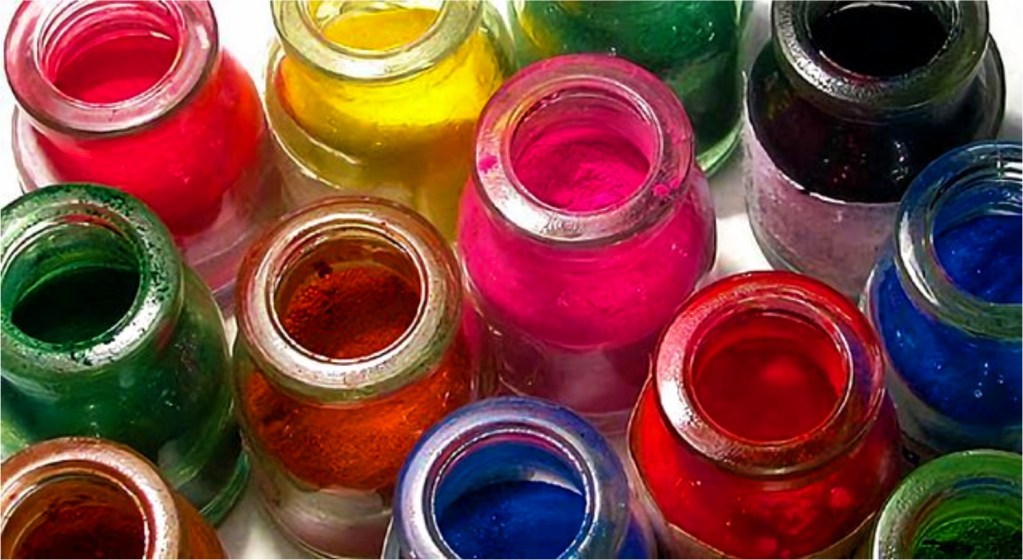
On Pigments | by Debu Barve
This introduction to the topic could very easily begin to move in several different directions at this point. For instance if we mention ‘dreams’ then we could bring in Sigmund Freud! But here when we say ‘colors’, (which is what we are going to say – we are going to talk about ‘Pigments’).
Now when we begin talking about pigments, we still have multiple things that we can discuss: physical basis, chemical understanding, technical understanding, historical (history of pigments, not history of art), artistic, etc.
Even from an artistic point of view, there are multiple aspects which will very soon convert this small intro into a good fat datasheet. (No, this is not going to happen!)
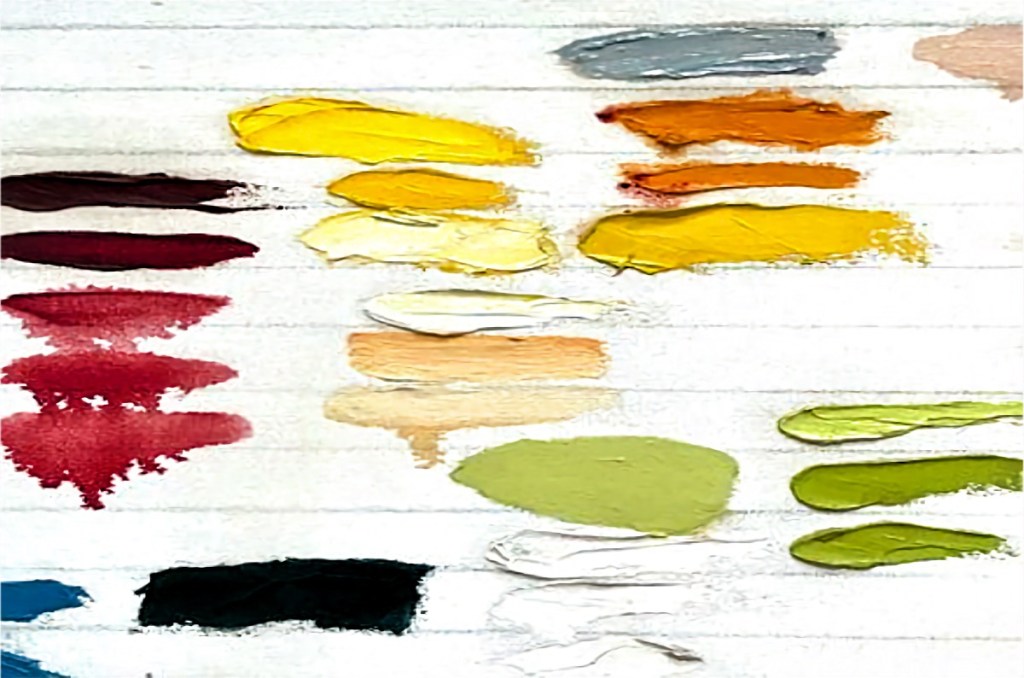
Joan Snyder
Summer, 1970
Oil and graphite on canvas, 56x91cm
What is a pigment:
A pigment is a dry coloring matter, usually an insoluble powder. When these dry colorants are mixed with binders also called ‘vehicles’ (such as linseed oil, resins, acrylic, wax etc.) we get various types of paints. But besides pigments and binders, paints can also contain various adhesives, stabilizers, preservatives and antioxidants (dryers) etc.
This means watercolors, pastels, gouache, color pencils, acrylic paints or oil paints, they usually share same pigments but different binders.
Pigment Categories:
Pigments have three basic categories
1) Organic substances (made from natural sources. Color example: Rose Madder)
2) Inorganic (made from sources like minerals and metals. Color example: Burnt Sienna). | 3) Synthetic pigments (artificially manufactured. Color Example: Cobalt Blue)
Pigment Types:

Artistically, there are 3 broadly defined pigment types
(Source: winsornewton.com)
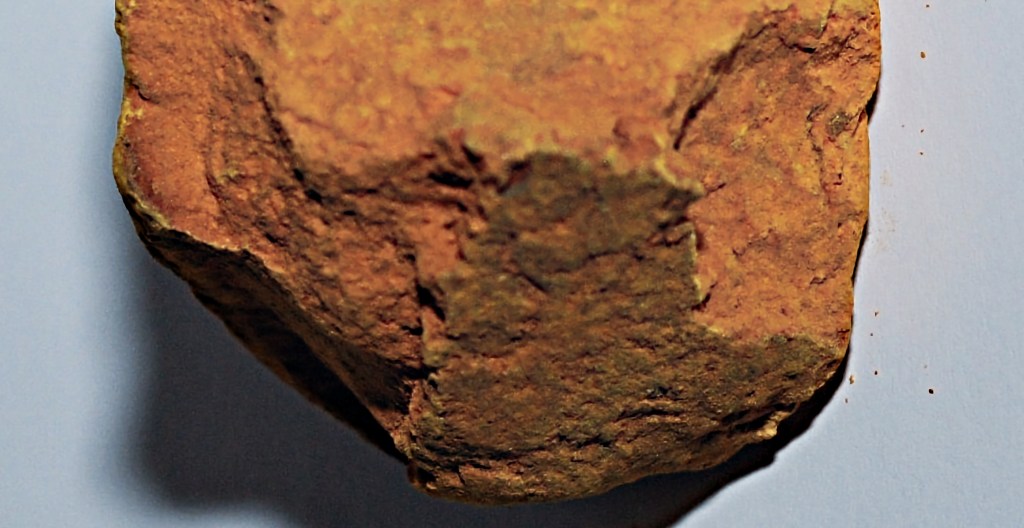
- Earth colors – ochres, siennas, umbers, Mars colors
- Traditional colors – cobalts, cadmiums, titanium, ultramarines
- Modern colors – phthalocyanines, quinacridones, perylenes, pyrrols.
Organic pigments made from natural sources have been used for centuries, but most pigments used today are either inorganic, or synthetic organic ones, (containing a carbon atom structure similar to the original organic pigment). Today, there also is a growing movement to make pigments and dyes from growing plants and micro algae, rather than through extraction of petroleum or minerals. See:
The industrial and chemical revolution in the 19th century changed the scenario rapidly and today what we get as consumer colors are mostly made out of synthetic pigments. Historically and culturally, many famous natural pigments have been replaced with synthetic pigments, while retaining their historic names. It is indeed good to know about colors more than just their names!

Debu Barve
The Existence, Acrylic, 20in x 12in The Sound, Acrylic, 20in x 12in
DEBU BARVE ART BLOG
I am an artist living in Pune, India. Besides painting, I love reading about art, history and culture.
And how about
some trivia on pigments?
More than 15,000 years ago cavemen began to use color to decorate cave walls. These were earth pigments, yellow earth (Ochre), red earth and white chalk. In addition they used carbon (Lamp) black by collecting the soot from burning animal fats.
Ancient Romans used to import indigo as a pigment from India by Arab merchants. They used it for medicinal and
cosmetic purposes. It was an expensive luxury item!
Indian Yellow was once produced by collecting the urine of cattle that had been fed only mango leaves.
Modern hues of Indian Yellow are made from synthetic pigments.
Vermilion was developed in China around 2,000 years before Romans started using it. Vermilion was made by heating mercury and sulphur.
Ultramarine was originally produced from the semi- precious stone lapis lazuli. In the 1820’s a national prize of 6,000 francs was offered in France to anyone who could discover a method of artificially making ultramarine at a cost of less than 300 francs per kilo. J B Guimet succeeded in 1828. Known as French Ultramarine ever since, the pigment is chemically identical to genuine ultramarine.
Lac is a red colorant originally made in India, which gave rise to the term ‘Lake’, meaning any transparent dye-based color precipitated on an inert pigment base, used for glazing. During the High Renaissance in Italy, Lac was the third most expensive pigment (after gold and Ultramarine), but most artists thought it worth the expense.
In 14th century, the Italians developed the range of earth pigments by roasting clays from places called Sienna and Umbria to make the deep rich red of Burnt Sienna and the rich brown of Burnt Umber.
The oil paint pigment van Dyck brown is named after 17th century’s great Flemish painter Anthony van Dyck.
Some of the most dangerously toxic conventional oil paints include:
- antimony white
- barium yellow
- cadmium red, orange, and yellow
- chrome orange, and chrome yellow
- cobalt violet, cobalt yellow, cobalt blue • cobalt yellow
- lead white, flake white
- lithol red
- manganese violet
- molybdate orange
- naples yellow
- strontium yellow
- vermilion
- zinc yellow
Emerald Green was a very popular wallpaper color but unfortunately in damp conditions arsenical fumes were released from it. It is thought that Napoleon died as a result of arsenic poisoning from the wallpaper in his prison home on the island St. Helena.
Payne’s gray is named after the 18th century watercolorist William Payne, this dark blue-grey colorant combines ultramarine and black, or Ultramarine and Sienna. It was used by artists as a pigment, and also as a mixer instead of black,
What are the safest Paints?
Pigments and Binders
CELLULOSE PAINT
“Whereas Size Paint uses animal glue, Cellulose Paint is plant-based. Its advantage over Size Paint is that it can be painted in layers. However it is still not for bathrooms or kitchens with high humidity. Cellulose Paint is an exciting medium for pigments, allowing their full beauty to be realized, as the pigments will sit on top of its surface giving the greatest light refraction. It can also be thinned to create a semi-transparent color wash. It is not high in opacity or hiding power.”
(quote from EarthPigments)
CASEIN PAINT
“Casein paint is a fast-drying, water-soluble medium used by artists. Casein paint has been used since ancient Egyptian times as a form of tempera paint, and was widely used by commercial illustrators as the material of choice until the late 1960s when, with the advent of acrylic paint, casein became less popular. It is still widely used by scene painters, although acrylic has made inroads in that field as well.” (quote from ‘Milkpaint’)
Example:
What are the safest paints?
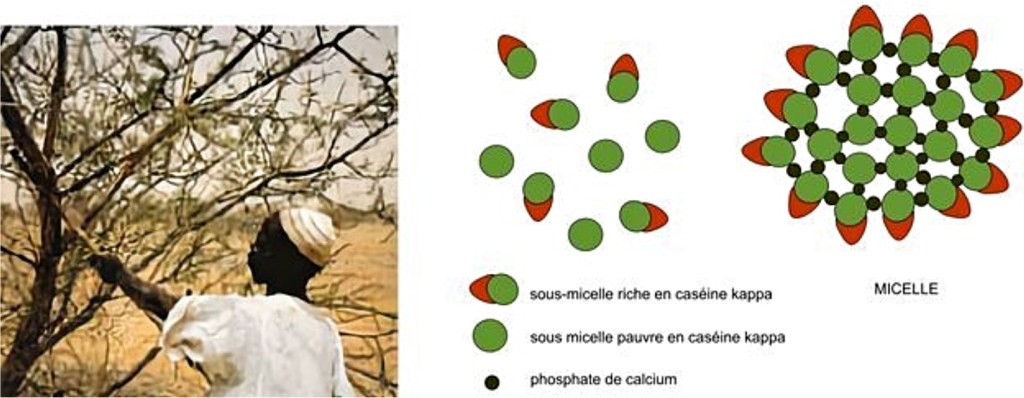
left: harvesting Gum Arabic in Senegal from a gum tree
right: a picture of a casein molecule (Wikipedia) this image illustrates natural formation of polymer micelles, preceding the invention of synthetic polymerization (acrylics)
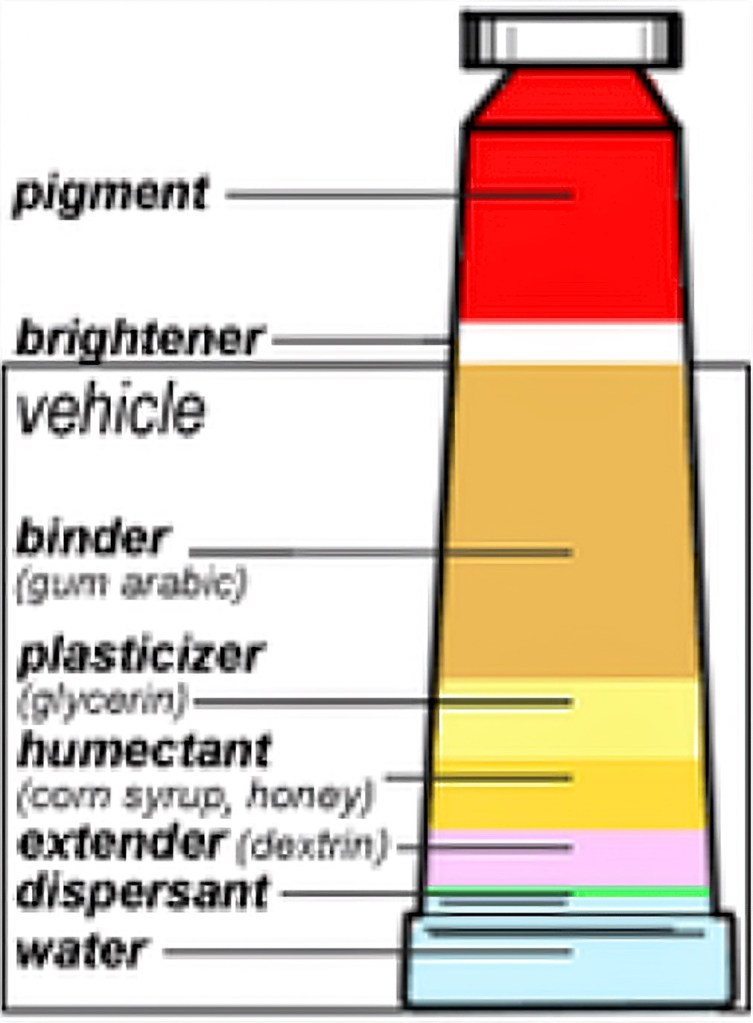
WATERCOLOR PAINT +
GOUACHE PAINT
(quoted from: how watercolor paints are made)
https://www.handprint.com/HP/WCL/pig mt1.html )
HANDPRINT: a wonderfully informative online resource on paints and pigments
“An artist’s life in olden times was genuinely risky. Pigments such as mercuric sulfide, lead oxide or emerald green (originally made with arsenic) were toxic to manufacture and toxic to use — and toxic meant it could kill you. Most painters lived through these dangers, however, so even starving artists were sufficiently forewarned not to eat their paints for dinner.”
Bruce MacEvoy , Handprint
There are a number of traditional resources that are the foundation of binders found in ‘safe’ paint or ink products, such as:
- linseed oil or walnut oil
- gum arabic
- dextrose
- starches
- casein
- methyl cellulose
- soy-based
also: - PVA, (wood glue, school glue)

recommended reading… the gripping history of
synthetic colorings based on coal tar /
Mauve: How One Man Invented a Color
That Changed the World, by Simon Garfield
New developments and innovation:
after years of research there are emerging options for acrylic-like resins and binders that claim to be completely derived from plant sources,
as well as free from any petroleum-
derived ingredients.
Examples:
1) Natural Acrylic Medium for artists (by Natural Earth Paints) https://naturalearthpaint.com
2) home decorating paints and mediums by Auro Eco Paints, https://www.aurointheusa.com
which contain a proprietary binder made from plant alcohol ester with organic acids.
Paints made from any of the above binding agents (with no harmful pigment or solvent additions) are of no great concern, and can be used as a preferred medium in daily practice.
- Artist Gouache or Watercolor Paints (with gum arabic binder)
- Oil Paints made from Walnut Oil using safe pigments (see: Maynord)
- Starch-based School Tempera Paint or Silkscreen Ink (by M Kahn)
- Milkpaint Wallpaint formulations
- Self-made paints made by mixing safe pigments with methyl cellulose (wallpaper glue)
- Self-made paints made by mixing safe pigments with PVA glue
- (The Pigment Place, UK), https://thepigmentplace.com
What are safe Pigments?
Artists wanting to make their own paints with gum arabic, eco acrylic, or walnut oil, can — with good sense and some research — find a full range of pigment powders that covers a full color spectrum and are light fast. (warning): Insufficient and poor-to-read safety labeling is widespread in the pigment industry, putting artists at risk. For example, what may be thought of as a contemporary formula for safe yellow, orange, red colorings may well be a toxic or even outright poisonous admixture.
The ‘toxic’ and the ‘nontoxic’ pigments are often presented and sold looking almost identical and with similar packaging, light fastness coding, and labeling. Generally, all pigments look very appealing, as we are all attracted to pretty colors and eye candy. But one can be used safely in your studio practice, the other could potentially kill you, make you sick, or harm your children as they play nearby. (examples: Cadmiums, Chromium, Arsenic, Lead, Mercury. …).
Below is a selection of pigment choices that cover dozens of the primary and secondary, luminous colors, but can be thought of as relatively safe to use.

the above detail of a painting was partially made with an innovative bio-based acrylic medium. (see below).
Example 1) (NEP) is made exclusively from earth pigments, which pose little or no hazard
Example 2) (Kremer) is made from a selection of modern synthetic organic pigments with a good safety rating,

synthetic pigments:
KREMER Pigments
(a specialist company from Germany) https://shop.kremerpigments.com/us/
Set: “Assortment of Studio Pigments small”
“This product does not require classification and labelling as hazardous according to CLP/GHS.”
HIDDEN TOXICITY: Regular users of paints, inks, pigments, and solvents are strongly advised to use all protective measures in all their work and look after their health; over thirty years of our research has shown that science and bodies such as the WHO constantly change advice to lay users on what’s toxic and what is not. (e.g. many materials advertised as ‘safe’ in the 1990s are now classed as ‘toxic’ due to compelling medical findings). Any published information on toxicity should be seen as a mere ‘base line’ for good practice; the information may yet prove to be wrong. There are many instances where materials and processes were or are seen or are advertised as safe, benign, and of low toxicity, but are actually known to industry and scientists as being much more harmful and dangerous to users than is acknowledged in the public domain.
NOTE:
- Many synthetic organic pigments have carcinogenicity.
- Some of the most common synthetic pigments, such as the alizarin family of colorings have recently been upgraded to ‘toxic’ status due to recent compelling reports of mutagenic, carcinogenic effects through oxidative damages in organisms.
- https://pmc.ncbi.nlm.nih.gov/articles/PMC9073274
- ADVICE: always wear masks, gloves, and respiratory protection when handling pigments; check the latest sds sheets and do an online toxicity check for each product used.
The future: artist paints made from bio plastics?
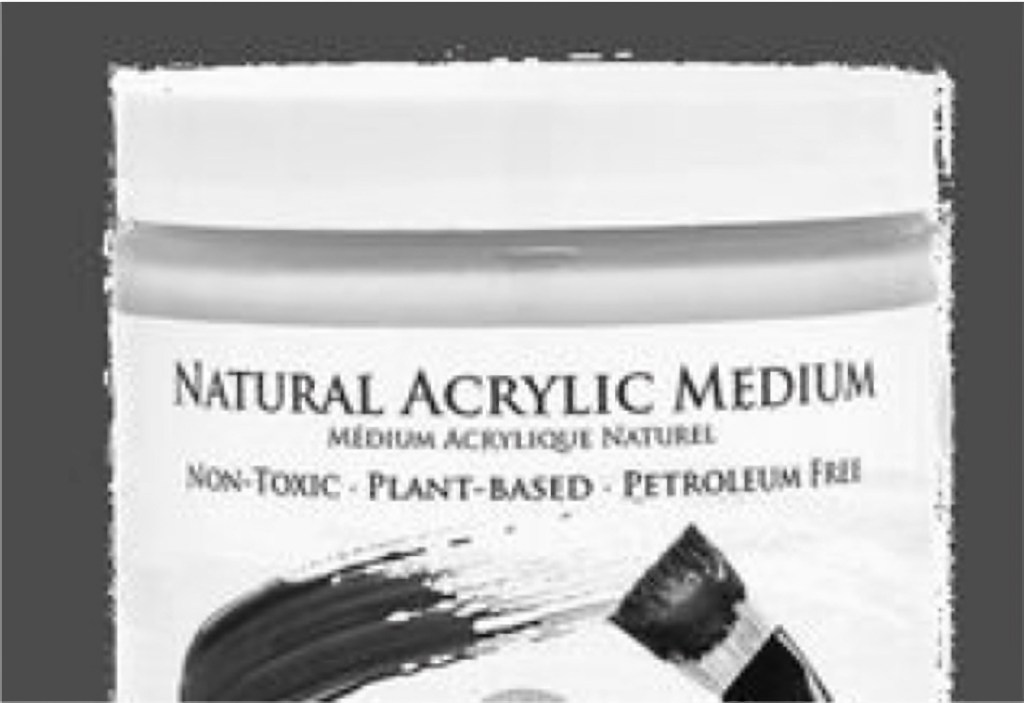
EXAMPLES
NEP Natural Acrylic medium was mixed with lamp black powder and water to obtain black paint. There was no discernible smell, and the paint dries rapidly, and handles similar to conventional petroleum-derived acrylic paints. Colors are optically correct without any color cast.
Natural Acrylic Medium for artists (by Natural Earth Paints) https://naturalearthpaint.com
(company QUOTE:) “Safety: Non-toxic with ZERO petroleum byproducts. Free from harmful additives, stabilizers, heavy metals, and other toxic chemicals. Safe to wash down the drain and won’t damage pipes.Quality: Plant-based with naturally archival ingredients. Permanent and water-resistant. Non-yellowing finish that dries clear. Highly flexible, durable, UV-resistant, and non-cracking when dry. Formulation:This product is a unique formulation that has been years in the making, so the specific ingredients are proprietary information.“
Bio-resins and acrylics: Fast-paced Research into sustainable plastics
Research into bio-based acrylics and resins has recently gone past the R+D stage, and we can expect innovative polymer paint products for artists and decorating to become available within the next few years.
PHA — Polyhydroxyalkanoate — seems to be among the most promising base ingredients for truly eco-based polymer paints. Below is a listing of some of the key characteristics by the Lowell Center for Sustainable Production • University of Massachusetts Lowell
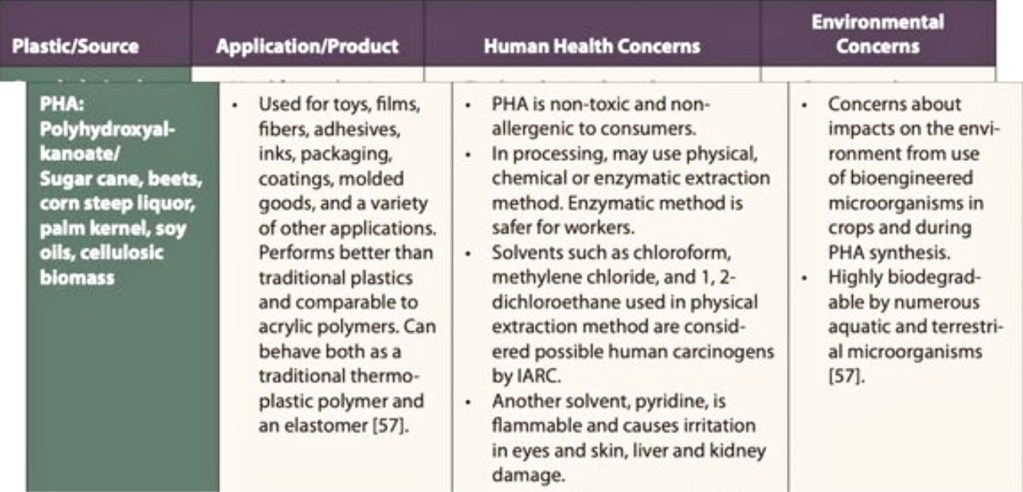
This table is an Excerpt from:
https://ec.europa.eu/environment/aarhus/pdf/35/Annex_11_report_from_Lowell_Center.pdf
Pigments and their History:
(excerpt from Wikipedia): Pigments and their History
Minerals have been used as colorants since prehistoric times. Early humans used paint for aesthetic purposes such as body decoration. Pigments and paint grinding equipment believed to be between 350,000 and 400,000 years old have been reported in a cave at Twin Rivers, near Lusaka, Zambia. Ochre, iron oxide, was the first color of paint. A favored blue pigment was derived from lapis lazuli. Pigments based on minerals and clays often bear the name of the city or region where they were originally mined.
Raw Sienna and Burnt Sienna came from Siena, Italy, while Raw Umber and Burnt Umber came from Umbria. These pigments were among the easiest to synthesize, and chemists created modern colors based on the originals. These were more consistent than colors mined from the original ore bodies, but the place names remained. Also found in many Paleolithic and Neolithic cave paintings are Red Ochre, anhydrous Fe2O3, and the hydrated Yellow Ochre (Fe2O3.H2O). Charcoal—or carbon black—has also been used as a black pigment since prehistoric times.
Synthetic pigments were introduced as early as the third or fourth millennium BCE. The first synthetic pigment is Egyptian blue (blue frit), calcium copper silicate CaCuSi4O10, made by heating a mixture of quartz sand, lime, a flux and a copper source, such as malachite. Already invented in the Predynastic Period of Egypt, its use became widespread by the 4th Dynasty. It was the blue pigment par excellence of Roman antiquity; its art technological traces vanished in the course of the Middle Ages until its rediscovery in the context of the Egyptian campaign and the excavations in Pompeii and Herculaneum.
Later premodern synthetic pigments include white lead (basic lead carbonate, (PbCO3)2Pb(OH)2), vermilion, verdigris, and lead-tin-yellow. Vermilion, a mercury sulfide, was originally made by grinding a powder of natural cinnabar. From the 17th century on, it was also synthesized from the elements. It was favored by old masters such as Titian. Indian yellow was once produced by collecting the urine of cattle that had been fed only mango leaves. Dutch and Flemish painters of the 17th and 18th centuries favored it for its luminescent qualities, and often used it to represent sunlight.
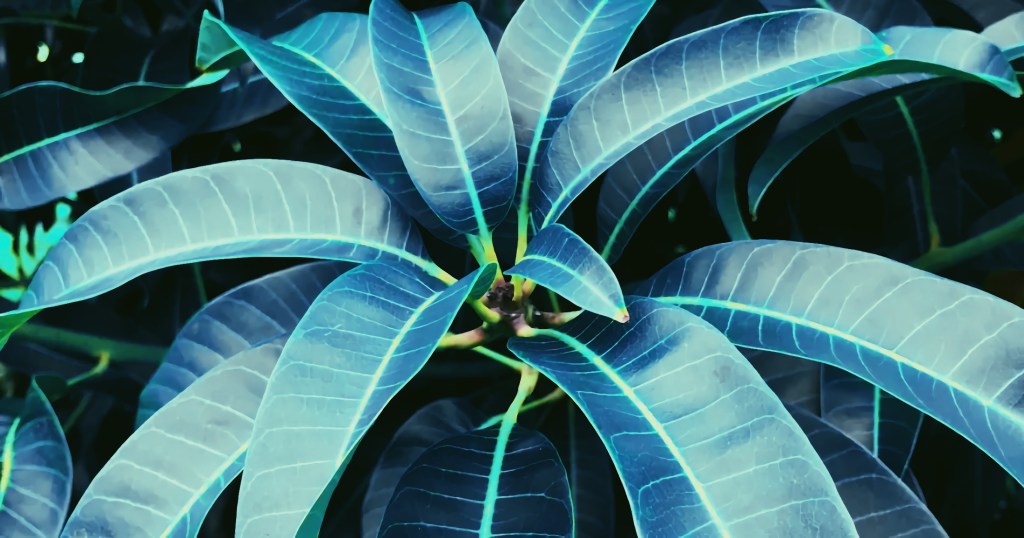
Indian Yellow – the cruel color
Indian Yellow was obtained from urin of cattle fed on mango leaves. Due to the poor nutritional value of these, the cattle nearly starved to death, and the practice was abandoned in modern times.
Since mango leaves are nutritionally inadequate for cattle, the practice of harvesting Indian yellow was eventually declared to be inhumane.[16] Modern hues of Indian yellow are made from synthetic pigments. Vermillion has been partially replaced in by cadmium reds.
Because of the cost of lapis lazuli, substitutes were often used. Prussian blue, the oldest modern synthetic pigment, was discovered by accident in 1704.By the early 19th century, synthetic and metallic blue pigments included French ultramarine, a synthetic form of lapis lazuli.
Ultramarine was manufactured by treating aluminium silicate with sulfur. Various forms of Cobalt and Cerulean blue were also introduced. In the early 20th century, Phthalo Blue, a synthetic metallo-organic pigment was prepared. At the same time, Royal Blue, another name once given to tints produced from lapis lazuli, has evolved to signify a much lighter and brighter color, and is usually mixed from Phthalo Blue and titanium dioxide, or from inexpensive synthetic blue dyes.
The discovery in 1856 of mauveine, the first aniline dye, was a forerunner for the development of hundreds of synthetic dyes and pigments like azo and diazo compounds. These dyes ushered in the flourishing of organic chemistry, including systematic designs of colorants. The development of organic chemistry diminished the dependence on inorganic pigments.
Cadmium Poisoning
Many artists think cadmium paints are relatively safe to use, unless accidentally ingested. Yet there is anecdotal and medical evidence that it is not uncommon for professional artists to suffer the debilitating effects of cadmium poisoning, especially through long term use.
“Utrecht Cadmium-Free Artists’ Colors” / in a test carried out by the company most artists felt the new cadmium free colors equaled or exceeded cadmium colors
https://en.wikipedia.org/wiki/Cadmium_poisoning
Cadmium Poisoning European Chemical Agency
Mechanism of toxicity
Cadmium (Cd) is an extremely toxic industrial and environmental pollutant classified as a human carcinogen according to International Agency for Research on Cancer;
according to Environmental Protection Agency (EPA); and 1B carcinogen classified by exposure may occur. Regulations that set permissible levels of exposure, (in industry) however, are enforced to protect workers and to make sure that levels of cadmium in the air are considerably below levels thought to result in harmful effects.
Artists who work with cadmium pigments, which are commonly used in strong oranges, reds, and yellows, can easily accidentally ingest dangerous amounts, particularly if they use the pigments in dry form, as with chalk pastels, or in mixing their own paints.
Full Site Map: a l l p a g e s / t o p i c s
art-well.org © 2025